

How to Fix an AC Unit That Keeps Freezing Up
Last Updated: October 31, 2026
Quick Summary
An ac unit freezing happens because warm air isn't moving across the evaporator coil fast enough, or because the refrigerant charge is too low. Low airflow lets the coil drop below freezing, and low charge drops the coil pressure and temperature the same way. Both build ice from the inside out.
A dirty or clogged air filter is the most common cause of a frozen AC.
Set the thermostat to OFF and kill power to the outdoor unit before thawing.
Check your filter monthly during cooling season and replace it every one to three months.
Restart the AC and check the indoor coil and refrigerant lines after 30 to 60 minutes.
Ice on the outdoor unit or refrigerant lines means you should call a professional.
Table of Contents
Why Is My AC Unit Freezing Up? Common Causes
Ice on the indoor coil almost always means one thing: the coil is running colder than it should. A frozen system is rarely a mystery once airflow, refrigerant charge, and the blower are examined.
Here's the short answer. An AC unit freezes because warm air isn't moving across the evaporator coil fast enough, or because the refrigerant charge is too low.
The usual suspects:
Dirty or clogged air filter. The most common cause by far.
Blocked or closed air vents. Supply and return registers choked off by furniture, rugs, or dampers.
Dirty evaporator coil. Dust and hair insulate the coil so it can't absorb heat.
Blower motor or fan failure. Weak airflow from a failing blower fan.
Low refrigerant or a refrigerant leak. The coil runs cold and ices over.
Thermostat problems. A faulty thermostat or a fan set to AUTO with a system running too long.
Oversized AC or undersized ductwork. Restricted airflow baked into the install.
Ice buildup is not a sign your AC is "working hard." It's a sign it's working wrong. A correctly charged system with good airflow does not freeze.
Watch out: running a frozen system makes it worse. Ice insulates the coil, airflow drops further, and the compressor keeps running under strain. Turn the cooling off before you do anything else.
How to Thaw a Frozen AC Unit Safely
Thawing a frozen AC is not a race.

Step 1: Stop cooling immediately. Set the thermostat to OFF.
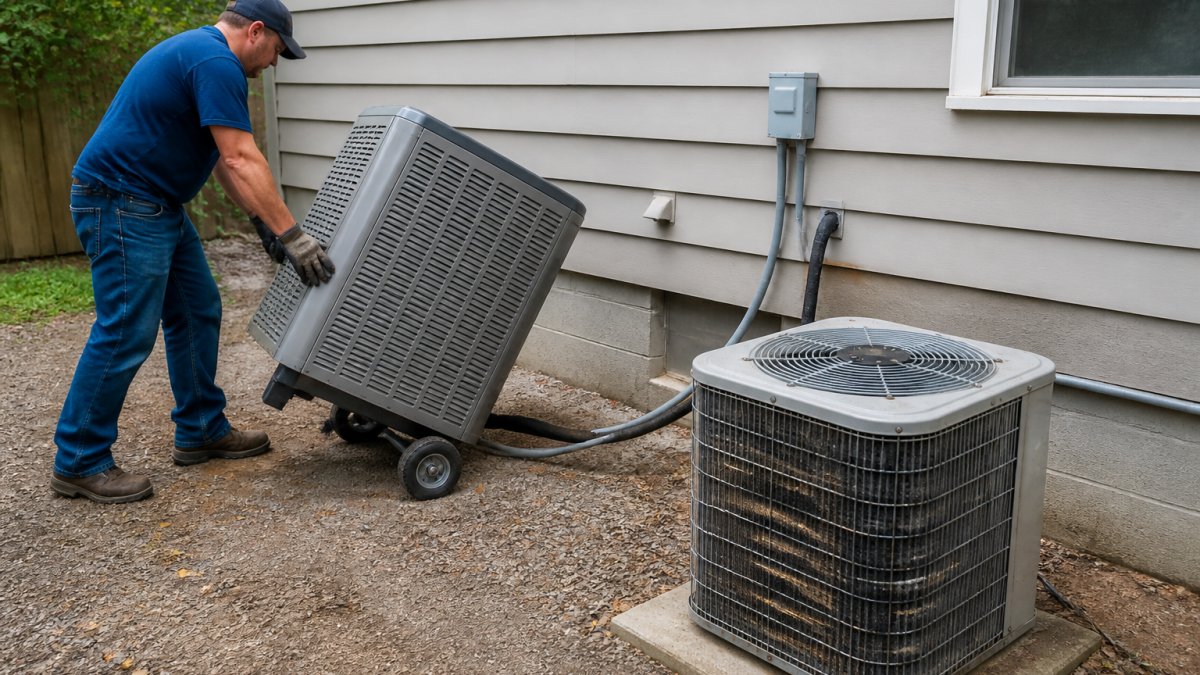
Step 2: Kill power to the outdoor unit. Pull the disconnect block at the condenser or flip the dedicated breaker.
Step 3: Check the filter and vents before anything else. Pull the air filter. If it is gray, matted, or visibly loaded, replace it now.
Step 4: Let it thaw, and know how long to wait. Thawing time varies with how much ice has formed, so check the coil and lines periodically as they clear.
Step 5: Confirm it is fully thawed before restarting. Look for three things: water in the drain pan or condensate line, no ice on the indoor coil or copper lines, and normal airflow at the vents. If any ice remains, keep waiting. Restarting with ice still present is the most common reason a frozen AC freezes again within a day.
Step 6: Restart and watch for 30 to 60 minutes. Run the AC and check the indoor coil and refrigerant lines after 30 to 60 minutes.
Watch Out Do not run a frozen system to "see if it clears." Ice insulates the coil, airflow drops further, and the compressor runs under strain. The longer you run it, the more likely you are to turn a cheap fix into a compressor replacement.
When to stop and call a pro during thawing:
Ice is on the outdoor unit or the outdoor refrigerant lines.
Ice returns within 24 hours of a proper thaw.
Airflow stays weak after a new filter and open vents.
You see refrigerant oil, residue, or frost at a line connection.
The breaker trips or the outdoor unit will not start.
Situation | What It Usually Means | Next Step |
Ice on indoor coil only | Airflow problem | Check filter, vents, blower |
Ice on outdoor lines and coil | Low refrigerant or restriction | Call a technician |
Ice returns after thaw | Cause not fixed | Professional diagnosis |
Weak airflow, no ice yet | Dirty filter or blower | Replace filter, inspect blower |
Ice on indoor coil after filter change | Coil or charge issue | Schedule service |
Dirty Air Filter and AC Freezing: The Airflow Connection
A dirty air filter is one of the most common reasons an AC freezes. The filter catches dust, and once it's clogged, the blower can't pull enough warm air across the evaporator coil. The coil gets cold, condensation freezes, and ice builds.
The fix is simple. Check your filter monthly during cooling season and replace it every one to three months, sooner if you have pets or a dusty home.
Blocked airflow doesn't stop at the filter. Closed vents, furniture pushed over return registers, and crushed flex duct all do the same thing. Walk your house and confirm every supply and return vent is open and clear.
AC Evaporator Coil Freezing Up: Signs and Solutions
The evaporator coil is the indoor coil that absorbs heat from your air. When it freezes, you'll usually notice weak airflow, warm air at the vents, and ice visible on the coil or the refrigerant lines.
A dirty coil is a common culprit. Dust and hair coat the fins, the coil can't transfer heat, and it ices over. Cleaning the coil is a job for a technician, since the fins bend easily and the coil sits inside the air handler.
Signs to watch for:
Ice on the indoor coil or copper lines
Weak airflow from the vents
Warm air instead of cool
Water around the air handler
The system running continuously without cooling
If you've changed the filter and opened the vents and the coil still freezes, the cause is likely the coil itself or the charge. That is the point to bring in a professional HVAC technician.
Low Refrigerant Symptoms in AC and What They Mean
Low refrigerant is the second big cause of a frozen AC, and it is the one homeowners misread most often. Refrigerant does not get "used up" like fuel. The system is sealed. If the charge is low, there is a leak somewhere, and topping it off without finding the leak just delays the next freeze.
Here is the mechanism: when the charge drops, pressure on the low side falls, the evaporator coil runs colder than it should, and moisture in the air condenses and freezes on the coil.
Symptoms and what they usually point to:
Ice on the outdoor unit and refrigerant lines. This is the classic low-charge clue. Ice on the indoor coil alone is more often airflow; ice on the outdoor lines and coil points toward a charge or restriction issue.
Hissing or bubbling sounds near the lines. A hiss can indicate a leak; bubbling can indicate refrigerant moving through a restriction. Neither is a homeowner diagnosis, but both are worth reporting.
Weak cooling and warm air at the vents. Low charge means less heat absorption, so the air feels less cold even though the system runs.
Short cycling or running nonstop. The system struggles to hit the setpoint and may cycle on and off or run continuously.
Higher energy bills for less comfort. The system works harder for less cooling.
What to do when freezing returns after a thaw. If you have thawed the unit properly, changed the filter, opened the vents, and the ice comes back, do not repeat the thaw-and-restart cycle.
Key Takeaway Ice on the outdoor unit or refrigerant lines, or ice that returns within 24 hours of a proper thaw, is your signal to stop troubleshooting and call a professional. Refrigerant work requires a licensed technician and the right equipment.
If you have checked the filter, opened the vents, and thawed the unit fully and the ice still comes back, the cause is likely the charge, the coil, or the blower. That is when a professional HVAC technician earns their keep.
When to Call a Professional for Your Frozen AC
Call a pro when the ice comes back after a proper thaw, when you see ice on the outdoor unit, or when airflow stays weak after a filter change. Those point to refrigerant, the blower, or the coil, and none of those are homeowner fixes.
A professional can diagnose the cause and repair it. If you're ready to stop troubleshooting, contact Choctawhatchee Plumbing for service.
Here's what to have ready for the call: the system age, the filter size, when the freezing started, and whether the ice is indoors, outdoors, or both.
Frequently Asked Questions
How long does it take for a frozen AC unit to thaw?
Thawing time depends on how much ice has formed. Once you turn off cooling and set the fan to ON, check for visible ice on the indoor coil and outdoor lines, and keep waiting until no ice remains. Running the AC before it's completely thawed can cause immediate re-freezing and potential compressor damage.
Can a dirty air filter cause an AC unit to freeze?
Yes, a dirty air filter is one of the most common causes. When the filter is clogged, airflow across the evaporator coil drops, causing the coil temperature to fall below freezing and condensation to turn to ice. Replace filters every 1-3 months, especially during peak cooling season, to maintain proper airflow and prevent freezing.
Is it safe to run an AC unit with ice on it?
No, running an AC with ice buildup is unsafe and can damage the compressor. Turn off cooling immediately and switch the fan to ON to help thaw. Continuing to run it may lead to liquid refrigerant flooding the compressor, causing costly repairs. Always thaw completely before restarting.
What are low refrigerant symptoms in AC and how do they cause freezing?
Low refrigerant symptoms include weak cooling, hissing or bubbling sounds, and ice on the evaporator coil or outdoor lines. Low refrigerant pressure causes the coil to drop below freezing, forming ice. This usually indicates a leak, which requires a licensed HVAC technician to locate and repair; simply adding refrigerant without fixing the leak is not a lasting solution.
A frozen AC won't fix itself, and every hour you run it frozen puts more strain on the compressor. At Choctawhatchee Plumbing, we diagnose the real cause instead of patching the symptom, from clogged coils and blower failures to refrigerant leaks. Our team handles residential HVAC repair and maintenance across the panhandle, and we show up ready to solve the problem. Get started with Choctawhatchee Plumbing and get your home cooling reliably again.
Comments