

8 Signs It's Time to Replace Your HVAC Unit
Last Updated: November 1, 2026
Quick Summary
You should replace HVAC unit equipment when age, rising energy bills, and frequent repairs show the system is no longer predictable. A common rule of thumb is to multiply the system's age by the repair cost and consider replacement if the result exceeds $5,000. Diagnose first, since dirty filters, thermostat issues, duct leaks, or refrigerant charge problems can mimic end-of-life behavior.
Central air conditioners and heat pumps typically last 10 to 15 years, while gas and electric furnaces last 15 to 20 years.
A repair quote approaching half the price of a new system is a common signal that replacement may be worth considering.
Coastal salt air accelerates corrosion on outdoor coils and cabinets, shortening equipment life.
Repeated service calls or repeated failures of the same component can signal a system that keeps consuming time and money.
A proper diagnosis including airflow measurement, refrigerant charge check, and duct assessment prevents buying equipment you do not need.
Table of Contents
8 Warning Signs You Need to Replace Your HVAC Unit
Knowing when to replace HVAC unit equipment comes down to a simple pattern: the system stops being predictable. It breaks at the worst time, costs more to run, and never quite keeps the house comfortable.

Age, Energy Bills, and Repair Frequency
System age is the first filter. Air conditioners and heat pumps generally reach the end of their useful life at some point, and a furnace often runs longer with consistent maintenance.
Rising utility bills are the second clue.
Frequent repairs seal it. Repeated service calls in a short period, or a repair quote that approaches half the price of a new system, is a common signal that replacement may be worth considering.
Comfort Problems: Uneven Temperatures, Weak Airflow, and Odd Noises
Comfort complaints are data too. Uneven temperatures between rooms, weak airflow at the vents, and short cycling (the system starting and stopping constantly) usually mean the equipment can no longer keep up with the load.
Then listen. Strange noises like grinding, banging, or rattling, and unusual odors that smell burnt or musty, are not quirks. They often trace back to failing motors, a refrigerant leak, or a heat exchanger problem.
How Long Do HVAC Units Last?
HVAC unit lifespan depends on equipment type, maintenance history, climate, and how hard the system runs. A single number hides more than it reveals, so treat any general lifespan guidance as a rough starting point and then adjust for your equipment and service record.
Equipment type | Typical service life | What shortens it |
Central air conditioner | 10 to 15 years | Coastal salt air, dirty coils, undersized returns, short cycling |
Heat pump | 10 to 15 years | Year-round runtime, defrost cycles, refrigerant leaks, filter neglect |
Gas furnace | 15 to 20 years | Heat exchanger stress, oversized equipment, skipped annual service |
Electric furnace | 15 to 20 years | Element wear, cycling, poor airflow |
Ductless mini-split | 12 to 20 years | Filter neglect, line-set damage, mounting corrosion |
Boiler | 15 to 25 years | Water quality, scale buildup, pressure problems |
Lifespan varies with the factors below. A well-maintained unit generally outlasts an identical neglected one, and a system that is correctly sized and matched to the ductwork tends to perform better over time.
What Moves the Number
Maintenance history. Annual professional service plus regular filter changes is the single biggest lever. A system that has never been serviced is a poor candidate for a major repair, regardless of age.
Climate and environment. Coastal homes face a shorter clock because salt air accelerates corrosion on outdoor coils and cabinets. Long, hot cooling seasons and cold winters both increase runtime and wear.
Usage and sizing. An oversized system short cycles, which wears the compressor and blower. An undersized system runs constantly and never catches up. Both shorten life.
Installation quality. Correct refrigerant charge, proper airflow, and sealed ductwork matter as much as the equipment brand.
Pro Tip If your equipment is near the top of its range and facing a repair that costs a meaningful fraction of a new system, the lifespan math usually points toward replacement, but confirm with a load calculation and a duct inspection before you commit.
Use these ranges to frame the conversation, not to end it. The next section turns age, repair cost, efficiency, and reliability into a single decision.
HVAC Repair vs Replacement Calculator: Running the Numbers
No single rule decides repair versus replace. The honest framework weighs five factors together: age, repair cost, expected remaining life, efficiency, and reliability. A commonly cited rule of thumb is to multiply the system's age by the repair cost and consider replacement if the result exceeds $5,000. It is a starting point, not a verdict.
The Five-Factor Framework
Age versus expected life. Compare the system's age to the realistic range for its type. A 14-year-old air conditioner facing a $900 repair is near the end of its range; a 6-year-old furnace facing the same repair is not.
Repair cost versus replacement cost. Some homeowners use a threshold of about half the cost of a new system as a rough guide. Below that, repair is often reasonable; above it, replacement deserves a serious look.
Expected remaining life. Estimate how many years the repaired system is likely to deliver. A $1,200 repair on a unit with two or three years left is expensive per year of service; the same repair on a unit with eight years left is a bargain.
Efficiency. Compare the existing system's efficiency rating to current equipment. A repair that restores an aging, low-efficiency system may still leave you paying more to operate it than a new unit would cost.
Reliability. Repeated service calls in a short period, or repeated failures of the same component, can signal a system that will keep consuming time and money even after the current repair.
Worked Examples
Situation | Age | Repair quote | Framework read | Likely move |
Occasional breakdown, young system | 6 years | $450 | Low cost, long remaining life, good reliability | Repair |
Mid-life system, one major repair | 11 years | $1,800 | Repair near half of new cost, moderate remaining life | Get a replacement quote |
Old system, rising bills | 16 years | $700 | Near end of range, declining efficiency | Replace |
Any age, heat exchanger or sealed-system issue | Varies | Varies | Safety or sealed-system problem | Diagnose first, then decide |
Watch Out Patching a failing system season after season feels cheaper in the moment, but emergency calls tend to arrive during peak heat or cold, when you have the least leverage on price and scheduling. Factor that risk into the comparison.
Before You Decide: Diagnose First
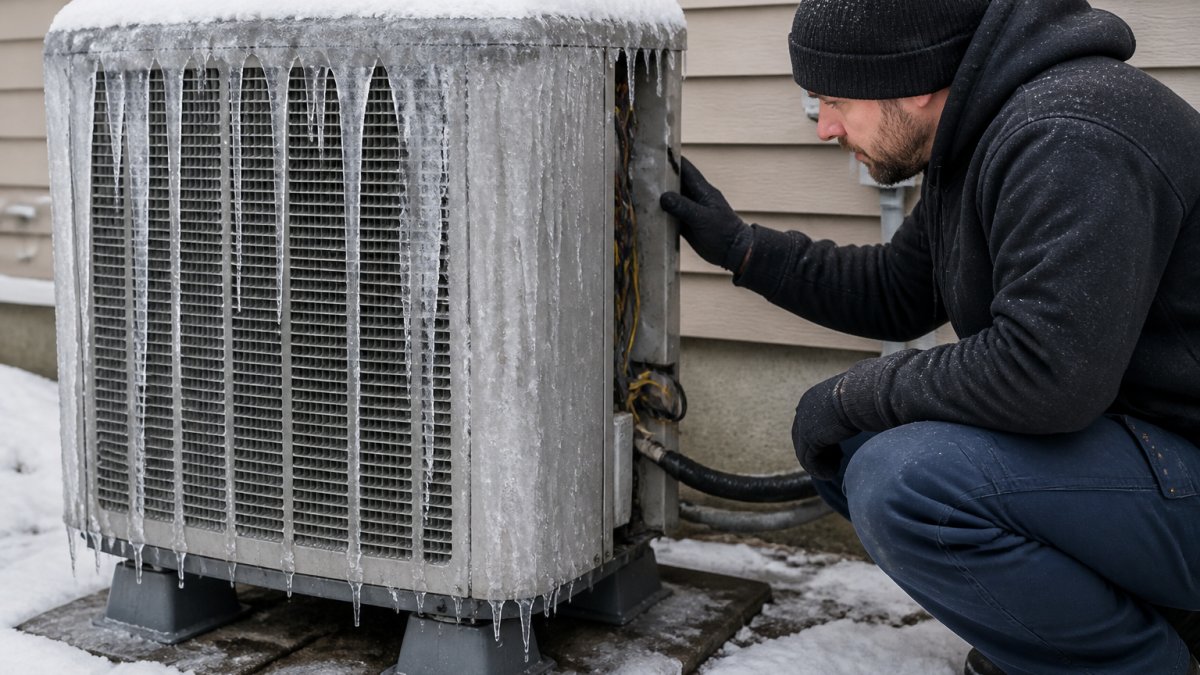
Many "failing system" symptoms are fixable without replacement. A dirty filter, a thermostat that is misconfigured or failing, a closed or blocked register, a duct leak, or a refrigerant charge issue can all mimic end-of-life behavior. A proper diagnosis, airflow measurement, refrigerant charge check, electrical and control inspection, and a duct assessment, separates a repair from a decision to replace HVAC unit equipment and prevents you from buying equipment you do not need.
Key Takeaway Use the $5,000 rule as a first pass, then weigh age, repair cost, remaining life, efficiency, and reliability together. When the factors point in different directions, a load calculation and in-home assessment settle it.
Average Cost of HVAC Replacement and What Moves the Number
The average cost of HVAC replacement varies widely, because the number is driven by system size, efficiency rating, ductwork condition, and whether you need a straightforward swap or a full changeout with new lines and electrical work. A higher-efficiency system costs more up front but can lower operating costs over its life. Coastal installations may add cost for corrosion-resistant equipment and mounting.
Energy Efficient HVAC System Benefits That Pay You Back
A modern, correctly sized system delivers two kinds of payback. The first is on your bill: higher efficiency ratings mean the equipment uses less energy for the same comfort, which shows up as lower operating costs month after month. The second is reliability: new equipment comes with a warranty, fewer breakdowns, and consistent cooling and heating performance. If you want to see how we handle installations and service, review our quality plumbing services.
Schedule a Replacement Assessment with Choctawhatchee Plumbing
A diagnosis before replacement is the step most homeowners skip, and it is the one that saves money. Our team specializes in residential HVAC and plumbing, including energy-efficient upgrades and both traditional and tankless water heater models, and we hold CMC 057103 and CFC 1433333. Call today to schedule a replacement assessment and get a plan built around your home.
Frequently Asked Questions
Is a 7-year-old AC unit considered old?
Not usually. A 7-year-old unit is generally still well within its service life, depending on maintenance and conditions. Age alone is not a reason to replace an HVAC unit. Look instead at repair frequency, rising energy bills, and whether the system keeps rooms evenly comfortable. A well-maintained 7-year-old system often has years left, while a neglected one may already be failing.
How does the 50% rule help when deciding to repair or replace?
The 50% rule is a simple benchmark: if a repair costs more than half the price of a new system, replacement usually makes more financial sense, especially on a unit past 10 years old. Pair it with the age of the equipment and how often it has broken down. A single repair on a young system is worth doing; a major repair on an aging one often just delays the inevitable.
What are the most common signs an HVAC system needs replacing?
The clearest signs are frequent breakdowns, repairs that keep adding up, utility bills climbing without a change in usage, uneven room temperatures, weak airflow, and unusual noises or odors. System age matters too, since equipment lifespan varies by type and maintenance history. When several of these appear at once, it is worth having a technician assess whether you should replace your HVAC unit rather than repair it again.
Will replacing my HVAC unit lower my energy bills?
A new high-efficiency system can cut energy consumption compared with an aging unit that has lost efficiency, but the savings depend on your home, ductwork, and how much you run the system. Ask for the efficiency ratings and compare them with your current equipment before assuming a payback timeline. Proper installation and sealing matter as much as the equipment itself.
Comments